
The DefTech Founder's Accelerator
Your technology works.The DoD hasn't bought it yet.
Not because your product is wrong.
Because your strategy is.
The Program of Record Playbook is a six-week cohort that teaches DefTech founders the only thing that actually crosses the Valley of Death: building operator, champion, and buyer credibility — simultaneously.
$3,000 / cohort
Next cohort: Spring 2026 · Seattle & JBLM · Limited to 8 companies
Applications reviewed personally by Patrick Byrne
The Problem
~1,500 DefTechStartups.Die In The Valley Every Year.
DefTech startups die in the Valley annually
Average time to program of record
Average time to first DoD contract
Startups that reach program of record status
Not because their products don't work. Because the DoD acquisition ecosystem was not designed for them.
The Valley of Death is the zone between $12M and $60M in cumulative revenue where the POM cycle outruns your runway, champions retire before contracts close, and Program Executive Officers who don't know you write the budgets that fund the programs you should be on.
It's survivable. But only if you know what you're doing.
The Myth
The DoD doesn't buy the best product.
It buys the most credible founder.
“You don't cross the Valley of Death. You're pulled.”
The pulling force is credibility — built simultaneously with operators, champions, and buyers.
Your Guide
We've Watched Too Many
Good Companies
Die In The Valley.
Warfighter Ready was founded on a simple truth: the founders who fail in the Valley aren't failing because their technology is bad. They're failing because no one taught them how the DoD actually buys things.
The POM cycle. The PEO's incentives. The champion's public language. The acquisition vehicle that fits their stage. The compliance posture they need before the door opens.
None of this is secret. None of it is taught.
We built the Program of Record Playbook because we were tired of watching preventable failures — and tired of seeing operators go into the field without tools that already existed, because the founder who built them couldn't navigate the acquisition system.
- ◆20+ Years Combined Defense Experience
- ◆80+ Defense Companies Supported
- ◆3 Active DoD Test Sites
- ◆Validated by Operators, Acquisition Officials & DefTech VCs
- ◆Air Force One Program Manager
- ◆NATO DIANA Expert Defense Mentor
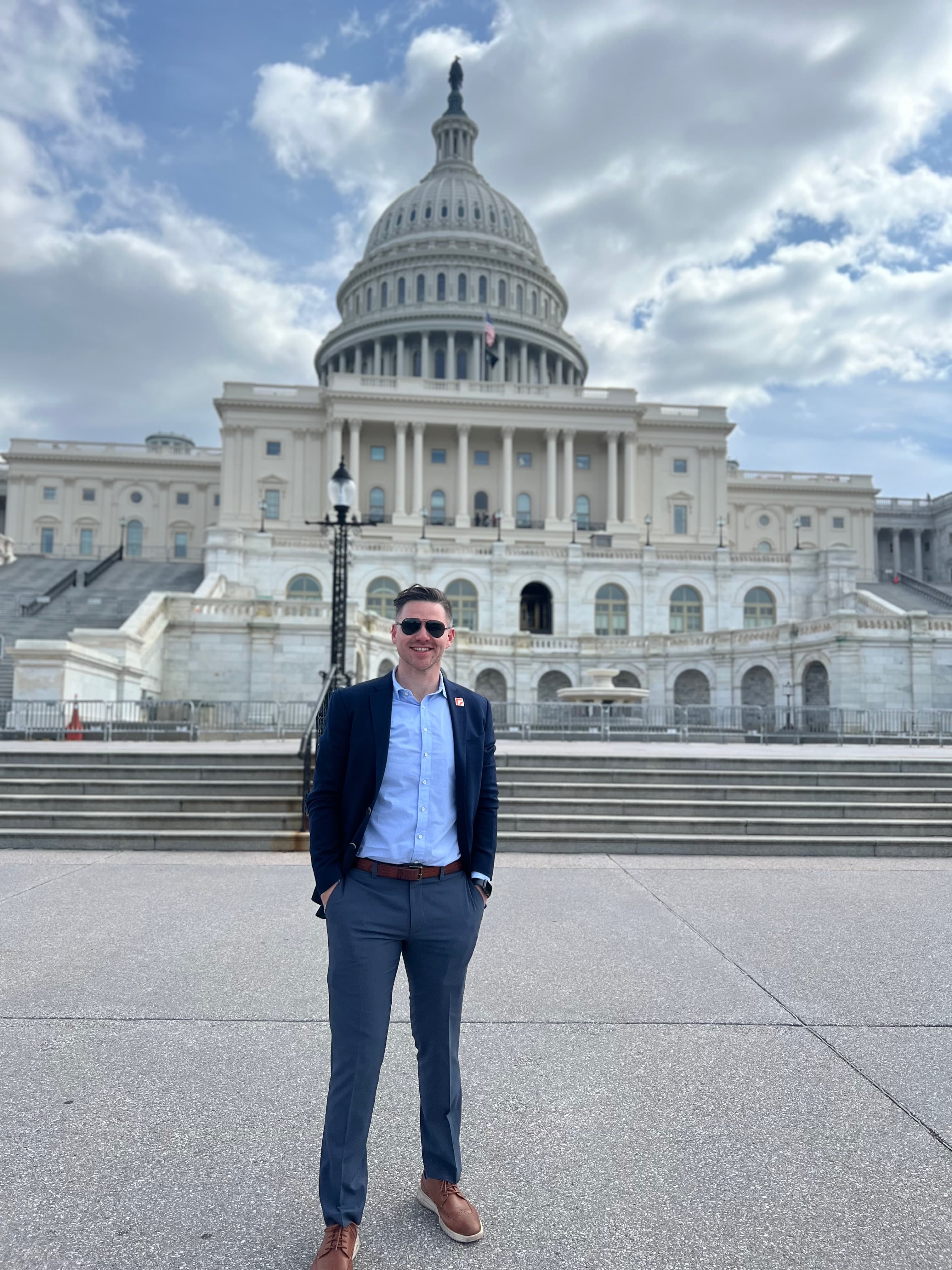
Patrick Byrne
Founder & CEO, Warfighter Ready
Air Force One Program Manager
NATO DIANA Expert Defense Mentor
The Plan
The 5-Point
Credibility Plan.
Six weeks. Five pillars. One strategy that actually crosses the Valley.
Personnel
Know your user before you need them.
The most important person on your team is your user — not your investors, not your advisors, not your team. Your user is the uniformed warfighter who will either validate your product in the field or not. Personnel credibility means real relationships: operators who tell you what's wrong with your product and advocate for it anyway. Without this, everything else in your acquisition strategy is built on assumption.
→ Where are you on the 0–5 Personnel scale? 0 = No user relationships. 5 = Uniformed champions actively advocating for funding.
Pain Point
Earn the right to solve the problem.
The better you understand the problem, the more you earn the right to solve it. That means studying field manuals, TTPs, and policy. Going on base. Asking great questions — not 'would you use this?' but 'what's the last time you thought this shouldn't be this hard?' Pain Point credibility is built through empathy, not features. Operators talk to founders who demonstrate they understand their world.
→ Can you trace your user's pain to a specific Joint Capability Area?
Promise
Speak the language of the people who decide.
A great DefTech promise has four parts: describe the pain in the champion's own words, state your measurable claim, show proofs of gain (testimonials, demos, data — in that order), and talk to the old brain. The old brain is selfish, visual, and contrast-oriented. It responds to before/after, to stakes, to who gets held accountable when the problem isn't solved.
→ Is your positioning statement built from your champion's public language?
Pathway
Map the route from pilot to program of record.
All roads lead to the PEO. Know your target Program Executive Officer by name, by priority, by budget cycle. Know where you are in the POM cycle relative to their budget build. Know your acquisition vehicle — OTA, SBIR III, CSO, FAR. Build the Downrange Dominos roadmap: how user relationships become champion relationships become buyer relationships become funded programs.
→ Have you started influencing your target PEO's POM build — right now?
Product
Be ready when the door opens.
Your product must be compliant, credible, and integrated into existing TTPs before you need it to be. CMMC, ATO, TTP compatibility, certification pathways — these are not afterthoughts. They are the price of admission. The founders who cross the Valley have their compliance posture built before the PEO asks for it.
→ Is your product ATO-ready? CMMC-assessed? TTP-compatible?
Self-Assessment
Where Do You Stand?
The Structure
You Don't Cross The Valley.
You're Pulled.
The Operator
The warfighter who validates your product in realistic conditions. Generates proof points, testimonials, and operational advocacy. Does not control budget. Source of all downstream credibility.
The Champion
The senior leader who connects your product to institutional priorities. Uses their own public language to fight for your solution inside the bureaucracy. Their career is invested in the outcome.
The Buyer
The Program Executive Officer who controls budget and owns the acquisition vehicle. Risk-averse, reputation-driven, bureaucracy-constrained. Extremely powerful when aligned.
Build all three simultaneously.
Building them sequentially is why most DefTech companies fail.
What Founders Say
Real Founders.
Real Results.
“Now I feel like I'm not pretending when I sound like I know what I'm talking about. I feel like we're starting to actually get the street cred. Confidence breeds confidence.”
Victoria Price-Doucet
Founder · Straty
Maritime AI / Autonomous Systems“When we had about 15 minutes left, I said — what if I told you we have a solution that addresses literally every single one of these problems? And they said: please tell us more. Can we get another meeting? The commander was on camera. Which in itself was a win.”
Victoria Price-Doucet
Founder · Straty
Maritime AI / Autonomous Systems“I feel like I found what my calling is. Not that many people can say that. And there is nothing better in life than that. So I'm just gonna make it happen.”
Mantas Gribulis
Founder · Taction
Autonomous Ground Vehicles / AI Swarm“If you're not building your product, champion, acquisition, and GR credibility together from the start, you're f*cked.”
“I like your energy and I can tell you care.”
Empathy is the entrance fee to user relationships.
“What we're doing here, now, this is the future of readiness.”
The Inaugural Cohort Panel
Operators / Mission Fit
LTC Denny Frey
Operator · Mission Fit
J.R. Mullis
Operator · Mission Fit
Acquisition / Pathway Fit
Col Philip Lamb
Acquisition Official · Pathway Fit
Rich Buractaon
Acquisition Official · Pathway Fit
Noah Sheibaum
Senior Stakeholder · Priority Fit
Michael Arnone
Senior Stakeholder · Priority Fit
Investors / Promise
Mark Waldenberg
Investor · Promise
Nigel Sharp
Investor · Promise
What Success Looks Like
Your Technology In The
Hands Of The Warfighter.
Imagine knowing exactly who your buyer is — by name, by priority, by budget cycle.
Imagine having operators who advocate for your product inside the bureaucracy — without being asked.
Imagine walking into a PEO meeting with a positioning statement built from their own public words, backed by field-validated proof points, mapped to the Operational Imperatives they were hired to address.
Imagine your Downrange Dominos roadmap showing exactly how today's user conversations become tomorrow's champion relationships become next year's funded program.
Imagine your product in the field.
That's what PoRP founders build toward. Not in years. In weeks.
| Before PoRP | After PoRP |
|---|---|
| ✗Great product, no clear path to scale | ✓Named PEO target by name and budget cycle |
| ✗Collecting meetings but not converting them | ✓Operators generating testimonials, not just coffee chats |
| ✗Pitch deck positioning | ✓Positioning statement in the champion's own language |
| ✗Hoping for the right introduction | ✓Downrange Dominos roadmap from today to program of record |
| ✗Wondering what to do next | ✓Knowing exactly what to do next |
“I was essentially trying to guess — are you building the right thing? Are you moving in the right direction? You didn't have that feedback loop of yes or no, and here's why. You're just throwing darts blind. And that was really, really hard. Once we started to actually access operators and get that feedback, momentum moved much faster.”
“The question I started asking every single person — including fairly high-ranking ones, I even asked it at the joint staff meeting — was: if you could wave a magic wand and have some capability, what would it be? And they'd go: 'that's a really good question.' And then it starts this whole dialogue.”
The Program
Six Weeks.
A Strategy That Works.
Format & Logistics
- ◆6 weekly live sessions — Wednesdays, 1pm PST, 60–90 min, recorded
- ◆Friday Office Hours — 9am PST, open topics, personalized coaching
- ◆Capstone Expert Panel — hybrid event, operators + acquisition officials + VCs
- ◆Small cohort — maximum 8 companies (applications reviewed)
- ◆Price: $3,000 per cohort
- ◆Next cohort: Spring 2026 · Seattle & JBLM
Weekly Curriculum
Kickoff
Valley of Death mapped. 5-Point Framework introduced. Your personal why reconnected.
Personnel
User identification strategy. OSINT + LinkedIn. JCA mapping. The Ultimate Engagement Formula.
Pain Point
Pain language (commercial vs. defense). Question discipline. Base visit protocol. The User Relationship Journey.
Promise
4-Part Promise structure. Champion engagement. Proof hierarchy. The old brain. Your positioning statement.
Pathway
The POM cycle. Colors of money. PEO engagement. Two paths to the money. Downrange Dominos roadmap.
Capstone
5-Point Plan presentations. Expert panel feedback. Next 90-day roadmap. Follow-up deep dives.
Each week includes homework that applies the framework to your specific company, users, and acquisition context. The frameworks only work if you apply them.
The Stakes
The Valley Is Patient.
Your Runway Is Not.
Every year the Valley claims more founders who deserved to make it.
The operators are still waiting for the tools.
The champions are still looking for credible startups to fight for.
The buyers are still looking for founders who understand how to get purchased.
The question isn't whether the DoD will buy from startups.
The question is whether it will buy from you.
~1,500 startups fail in the Valley every year.
Not because of their technology.
Because of their credibility strategy.
“I had run large business units before. I managed business lines worth tens of millions of dollars. But it's very different when it's you. I was like — I don't know anything. I need adult supervision. This is insane. And now I'm starting to feel less like the little kid in the room when I'm talking to defense groups.”
That's preventable. That's why PoRP exists.
Let's Get Your Tech
Into The Field.
Applications for the next cohort are open. Space is limited to 8 companies to ensure each founder receives the full attention of our team and network. Applications are reviewed personally by Patrick Byrne.
$3,000 / cohort · Spring 2026 · Applications Reviewed Personally
“Why 1,500 DefTech Startups Fail Every Year — And What the Survivors Did Differently”
60 minutes · Live Q&A · No pitch